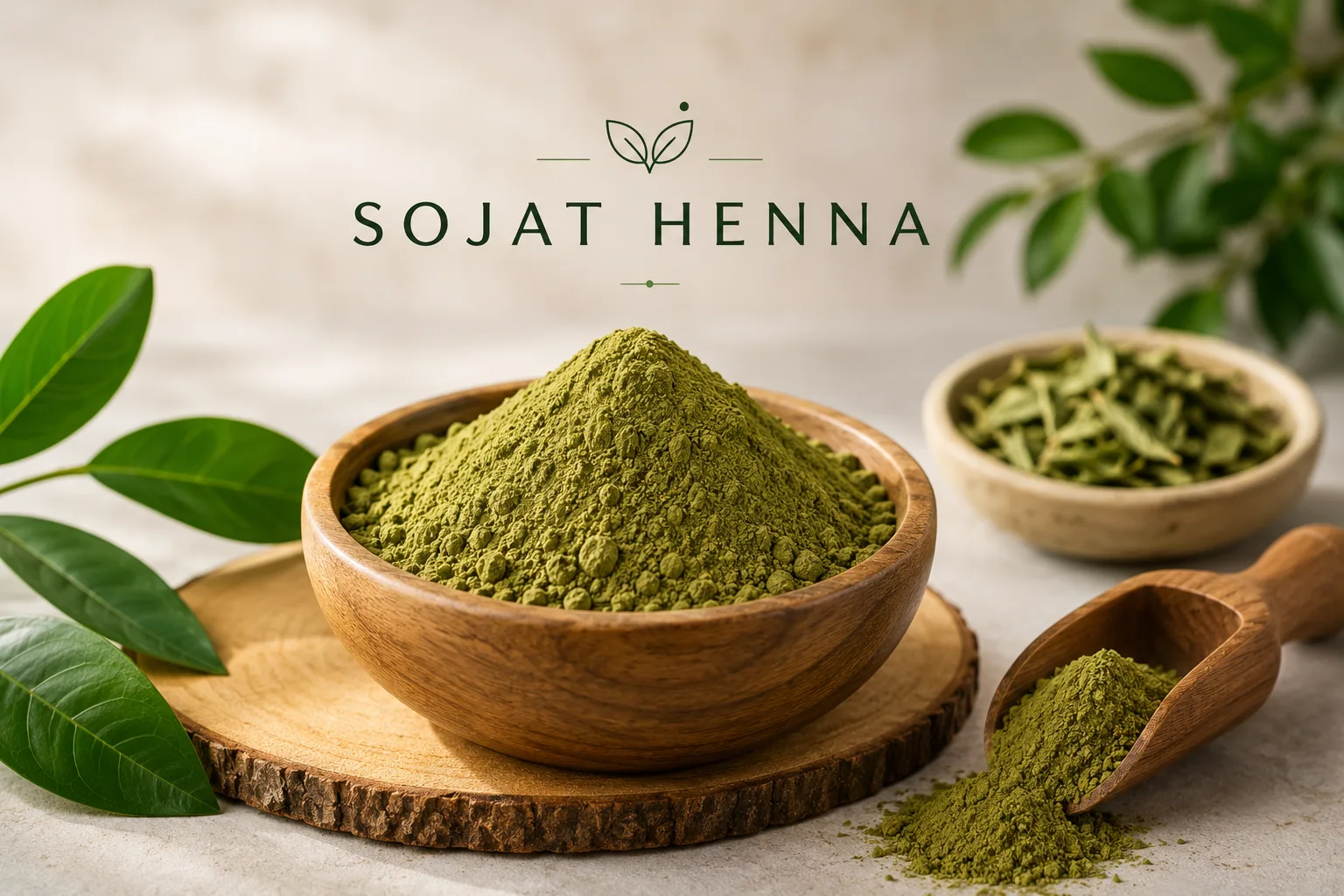
For centuries, henna has been more than just a natural dye—it has been a symbol of beauty, tradition, wellness, and cultural heritage. Among the many regions that cultivate henna, Sojat, Rajasthan, has earned worldwide recognition for producing some of the finest-quality henna powder available. Known for its rich color, high lawsone content, and exceptional purity, Sojat Henna Powder is trusted by households, beauty professionals, herbal brands, and manufacturers across India and around the world.
Whether you're looking for a chemical-free hair color, premium-quality mehndi, or simply want to understand why Sojat has become India's henna capital, this guide covers everything you need to know. From its cultivation and processing to its benefits, uses, and tips for identifying authentic Sojat henna, you'll discover why it continues to set the benchmark for natural henna.
Sojat Henna Powder is a finely milled natural powder made from the dried leaves of the Lawsonia inermis plant, commonly known as the henna plant. It is produced in and around Sojat City in Rajasthan's Pali district, a region internationally recognized for cultivating premium-quality henna due to its favorable climate, fertile soil, and long-standing agricultural expertise.
Unlike synthetic hair dyes that rely on chemicals to alter hair color, Sojat Henna Powder naturally contains lawsone, a pigment that binds with keratin in the hair and skin to produce a rich reddish-brown stain. This natural coloring property has made henna a preferred choice for generations seeking a safer alternative for hair coloring and traditional body art.
The leaves are carefully harvested, sun-dried under controlled conditions, finely ground, and multiple times filtered to produce a smooth, easy-to-mix powder. High-quality Sojat henna is valued for its fresh herbal aroma, vibrant green color, and consistent staining performance.
Today, Sojat Henna Powder is widely used for:
Its versatility, purity, and natural origin have made it one of India's most sought-after herbal products.
When people think of premium henna, Sojat is often the first place that comes to mind. This reputation has been built over decades through ideal growing conditions, experienced farming communities, and a strong focus on quality.
Several factors contribute to Sojat's global recognition.
Henna thrives in hot, dry climates with abundant sunlight. Rajasthan's semi-arid environment provides exactly these conditions, allowing henna plants to develop healthy leaves with excellent pigment concentration.
The region experiences:
These natural conditions help produce leaves that are rich in coloring compounds while maintaining excellent quality.
The soil around Sojat offers the right balance of minerals and drainage required for healthy henna cultivation. Well-drained soils prevent excessive moisture around plant roots while encouraging strong leaf development.
Healthy soil contributes to:
This combination plays an important role in producing premium-grade henna powder.
Henna farming in Sojat is deeply rooted in local agricultural traditions. Many farming families have cultivated henna for generations, refining their knowledge through years of practical experience.
This expertise includes:
Such traditional knowledge continues to contribute to the consistent quality associated with Sojat Henna Powder.
Beyond cultivation, Sojat has developed a strong ecosystem for henna processing and distribution. The region is home to numerous facilities specializing in cleaning, grinding, filtering, packaging, and supplying henna for domestic and international markets.
This integrated supply chain helps maintain product consistency while meeting the quality requirements of consumers, retailers, and exporters.
Producing premium henna powder involves much more than simply drying leaves. Every stage—from cultivation to final packaging—plays an important role in preserving the natural qualities of the plant.
Henna shrubs are grown in carefully managed agricultural fields where they receive sufficient sunlight and seasonal rainfall. Farmers monitor plant health throughout the growing cycle to ensure vigorous leaf development.
Healthy cultivation practices contribute to better-quality raw material for processing.
Once the plants reach the appropriate stage of growth, mature leaves are harvested. Timing is important because properly matured leaves generally contain stronger natural pigments compared to immature foliage.
Harvesting is carried out carefully to preserve leaf quality before drying.
Fresh leaves are cleaned and dried under suitable conditions to reduce moisture while preserving their natural color and beneficial compounds.
Proper drying helps maintain:
Poor drying methods can affect the overall performance of the final product, making this one of the most important stages of production.
After drying, the leaves are ground into an ultra-fine powder using specialized milling equipment.
The objective is to create a smooth texture that mixes easily with water and produces a lump-free paste suitable for both hair applications and mehndi designs.
Premium Sojat Henna Powder typically undergoes multiple filtration stages to remove coarse particles and impurities.
Fine filtration helps achieve:
This step is particularly important for professional mehndi artists and cosmetic manufacturers.
The finished powder is packed using clean, controlled packaging processes designed to protect freshness and minimize exposure to moisture.
Quality packaging helps preserve the product during storage and transportation while maintaining its natural properties.
Before reaching consumers, reputable manufacturers inspect the product for consistency, texture, cleanliness, and overall quality.
Reliable quality control helps ensure that customers receive pure henna powder suitable for its intended use.
Not all henna powders deliver the same performance. The quality of the leaves, cultivation methods, processing standards, and freshness all influence the final product.
Sojat Henna Powder is widely appreciated because it typically offers:
These characteristics have helped establish Sojat as one of India's most respected henna-producing regions.
Benefits of Sojat Henna Powder
The growing popularity of Sojat Henna Powder isn't just based on tradition—it's also valued for its natural properties and versatility. Whether you're using it for hair care or body art, high-quality henna offers a range of benefits when used correctly.
One of the biggest advantages of Sojat Henna Powder is that it provides a plant-based coloring option without relying on harsh chemical dyes. Many people choose natural henna as part of a more herbal hair care routine.
Unlike many conventional hair dyes, pure henna works by coating the hair shaft with its natural pigment rather than chemically altering the hair structure.
For those looking to blend or cover grey hair, Sojat Henna Powder is a popular natural choice. Depending on your original hair color and application method, it can produce shades ranging from copper to rich reddish-brown.
Many users also combine henna with indigo in traditional herbal hair coloring routines to achieve darker shades.
Besides coloring, henna is widely appreciated for its conditioning effect.
Many users report that regular use helps hair appear:
Because henna forms a protective coating around each strand, it can also improve the appearance of hair texture.
The fine texture and natural staining ability of premium Sojat Henna Powder make it suitable for creating intricate mehndi patterns.
Professional artists often prefer finely sifted henna because it:
Authentic Sojat Henna Powder should contain only finely processed henna leaves without unnecessary artificial dyes or synthetic color enhancers.
Choosing products from reputable manufacturers helps ensure purity and quality.
Sojat Henna Powder is used in a variety of applications, including:
Its versatility makes it one of the most widely used botanical ingredients in natural beauty products.
Henna has remained popular for centuries because it serves multiple purposes across beauty, culture, and personal care.
One of the most common applications is natural hair coloring.
Many people use Sojat Henna Powder to:
Henna holds deep cultural significance during weddings across India.
Bridal mehndi ceremonies symbolize:
The fine quality of Sojat Henna Powder makes it well-suited for creating detailed bridal designs.
Henna is widely applied during traditional festivals and special occasions, including:
These occasions continue to keep the tradition of natural mehndi alive across generations.
Many people include henna in DIY herbal hair masks by combining it with ingredients such as:
These combinations are commonly used in natural hair care routines.
Sojat Henna Powder is also used by cosmetic companies manufacturing herbal products such as:
Its reputation for quality makes it a preferred raw material for many brands.
Although all henna comes from the same plant species (Lawsonia inermis), factors such as climate, cultivation methods, harvesting, and processing can influence the quality of the final powder.
|
Feature |
Sojat Henna |
Regular Henna |
|
Origin |
Sojat, Rajasthan |
Various regions |
|
Leaf Quality |
Carefully cultivated |
Varies by source |
|
Texture |
Finely sifted |
May be coarse |
|
Aroma |
Fresh herbal fragrance |
Can vary |
|
Consistency |
Generally more uniform |
Depends on processing |
|
Suitable For |
Hair care, mehndi, cosmetics |
General-purpose use |
The final performance of any henna product also depends on freshness, processing standards, storage, and overall product quality.
With growing demand, it's important to know how to choose genuine henna.
Here are a few signs of quality:
Pure henna powder usually has a natural olive-green appearance.
Very dull, brown, or unusually bright-colored powder may indicate poor storage or added ingredients.
Premium henna should feel soft and smooth.
A fine texture mixes more easily into a lump-free paste and is especially important for mehndi cone applications.
Fresh henna has a pleasant earthy fragrance.
A strong chemical smell may indicate additives or artificial ingredients.
Always read the label carefully.
Pure henna products should clearly list henna (Lawsonia inermis) as the primary ingredient.
Buying from an experienced manufacturer with quality-focused production practices increases the likelihood of receiving fresh, properly processed henna.
Look for:
Whether you're purchasing for personal use or business purposes, keep these practical tips in mind:
These simple steps help maintain product quality and ensure a better user experience.
How to Use Sojat Henna Powder for Hair
Applying Sojat Henna Powder correctly helps achieve better color, smoother application, and more consistent results. While preparation methods may vary based on personal preferences, the following steps provide a general guide.
Take the required amount of Sojat Henna Powder in a clean, non-metallic bowl. Gradually add warm water while stirring until you achieve a smooth, yogurt-like consistency. Some people also mix traditional herbal ingredients such as amla powder or fenugreek, depending on their hair care routine.
Allow the paste to rest for a few hours, if recommended by the product instructions, so the natural dye molecules can develop.
Wash your hair with a mild shampoo to remove excess oil, dirt, and styling products. Avoid using heavy conditioners immediately before applying henna, as they may reduce even coverage.
Your hair should be clean and slightly damp before application.
Wear gloves and divide your hair into small sections. Starting from the roots, apply the paste evenly toward the ends, ensuring complete coverage. Once finished, gather your hair and cover it with a shower cap or wrap.
The recommended application time depends on your hair type, desired color intensity, and the product's instructions. Leaving the paste on longer may result in a deeper color.
Rinse your hair thoroughly with plain water until all the henna paste is removed. Many people wait 24–48 hours before shampooing to allow the natural color to fully oxidize and deepen.
To get the best experience with natural henna:
Pure Sojat Henna Powder is made from the dried leaves of the Lawsonia inermis plant. However, always check the ingredient list and buy from trusted manufacturers to ensure you're getting a genuine product without unnecessary additives.
Sojat is known for its favorable climate, fertile soil, and generations of expertise in henna cultivation and processing. These factors have contributed to its reputation as one of India's leading henna-producing regions.
Yes. Many people use natural henna to blend or cover grey hair. The final shade depends on your original hair color, application method, and whether henna is used alone or with other herbal ingredients such as indigo.
Yes. Finely sifted Sojat Henna Powder is commonly used to prepare smooth mehndi paste for bridal, festive, and traditional body art applications.
Store it in an airtight container in a cool, dry place away from moisture, heat, and direct sunlight to help maintain freshness and quality.
Usage depends on individual hair care goals. Many people apply henna every 4–6 weeks, but frequency may vary based on hair growth, color preferences, and personal routines.
Pure natural henna is generally used as a plant-based hair coloring option and is often included in herbal hair care routines. However, results can vary, so it's advisable to perform a patch test and follow product instructions.
Look for:
The quality of henna depends not only on where it is grown but also on how it is harvested, processed, filtered, and packaged. Reputable manufacturers follow consistent quality standards to help preserve the freshness, purity, and natural properties of the henna leaves.
When purchasing Sojat Henna Powder, consider factors such as:
Choosing a trusted source can help ensure a better experience whether you're buying henna for personal use, salons, cosmetic manufacturing, or wholesale supply.
Sojat Henna Powder has earned its reputation through generations of cultivation, skilled craftsmanship, and favorable growing conditions unique to Rajasthan. Its fine texture, natural coloring ability, and versatility have made it a preferred choice for hair care, mehndi, and herbal beauty products across India and international markets.
Whether you're looking for a natural alternative to chemical hair dyes, preparing for a traditional mehndi ceremony, or sourcing premium-quality henna for commercial purposes, understanding the origin and quality of Sojat Henna helps you make an informed decision.
By selecting authentic, carefully processed henna from a reliable manufacturer, you can enjoy the benefits of one of India's most celebrated botanical products while supporting a tradition that has been valued for centuries