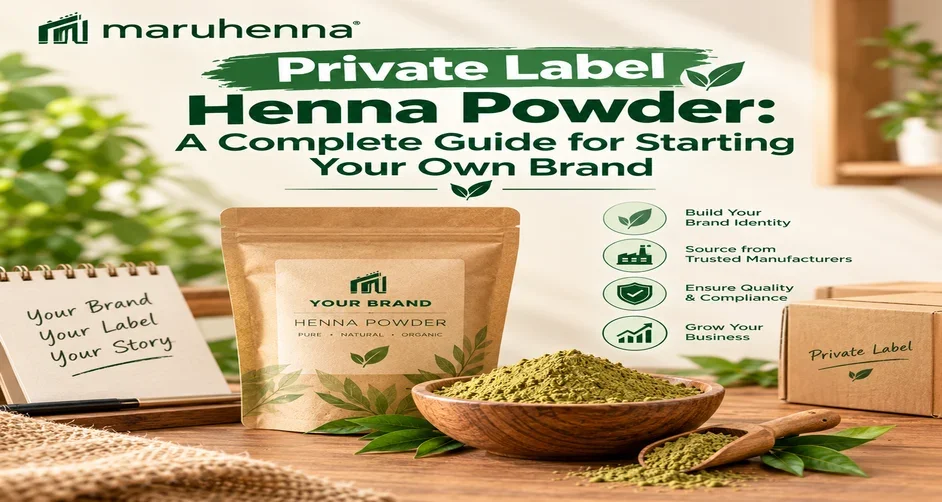
The natural beauty market offers opportunities for entrepreneurs who want to develop their own product brands. Henna powder is one product category with established uses in hair colouring, traditional mehndi, and botanical beauty applications.
For businesses interested in selling henna under their own brand name, private-label supply can be an option worth exploring.
Rather than establishing an entire manufacturing operation, a business may work with a suitable supplier to source products and arrange branding and packaging according to an agreed business model.
This guide explains the key steps involved in launching a private-label henna powder product.
Private-label henna powder is supplied or manufactured under an arrangement that allows a business to sell the product under its own brand.
Depending on the supplier and agreement, the services may include:
Not every supplier offers every service. Before starting a project, confirm which activities the supplier performs and which responsibilities remain with your business.
A private-label product allows you to develop your own packaging, visual identity, and market positioning.
Depending on the product and applicable regulations, you may target individual consumers, salons, mehndi artists, retailers, or professional buyers.
Working with an established supplier may allow you to focus on brand development, distribution, and customer relationships instead of setting up your own processing facility.
You may begin with one product and explore additional pack sizes or related products as demand develops.
However, private labeling does not guarantee profitability. Market research, product quality, pricing, and distribution all influence business performance.
Before selecting a supplier, decide who you want to sell to.
Individual customers: They may prioritise convenient packaging, clear instructions, ingredient transparency, and value for money.
Salons and mehndi artists: They may require practical pack sizes, dependable supply, and product consistency.
Retailers and distributors: They may consider product margins, packaging, customer demand, and the reliability of repeat orders.
International buyers: They may require destination-specific labelling, documentation, shipping arrangements, and regulatory compliance.
Understanding your customers helps you make better decisions about product positioning and packaging.
Not all henna products are suitable for the same purpose.
Natural henna comes from the leaves of the Lawsonia inermis plant and is known for its warm colouring properties.
Before choosing a product, confirm whether it is intended for hair colouring, body art, or another specific application.
Ask the supplier about:
Avoid unverified claims about product performance, organic status, or certifications.
Your supplier plays an important role in product quality and business continuity.
Consider the following factors when comparing potential suppliers.
Ask how the product is processed and what quality checks are performed.
Discuss how specifications are maintained across different batches and repeat orders.
Confirm which packaging materials, sizes, and customisation options are available.
Ask about the minimum quantity for standard products and customised packaging.
Choose a supplier that clearly explains quotations, timelines, payment terms, and delivery arrangements.
Request the relevant product specifications and supporting documents for your intended market.
Comparing these factors can help you make a more informed decision than choosing based on price alone.
Packaging protects the product and helps customers understand what they are purchasing.
Your packaging plan should include:
Ensure the final label complies with the applicable requirements for the product and the market in which it will be sold.
Do not make unsupported claims about certifications, testing, or results.
Before placing an order, request a detailed quotation.
Depending on the arrangement, costs may include:
Confirm the minimum order quantity, payment terms, production timeline, and reorder requirements.
If you are launching a new brand, consider starting with a manageable quantity if the supplier offers a suitable option.
Request a representative sample where available and evaluate it against the agreed specifications.
Depending on the intended use, relevant checks may include powder texture, appearance, packaging quality, ingredient information, and suitable testing documentation.
A sample can help you assess whether the product meets your requirements, but appearance alone cannot establish purity or safety.
Resolve any quality questions before committing to a large order.
Product regulations depend on the product category and intended market.
Before selling your private-label henna powder, verify the applicable requirements for ingredient declarations, product claims, packaging, labelling, documentation, and any necessary registrations or testing.
If you plan to export, review the requirements of each destination market before finalising packaging or shipping.
Seek qualified regulatory guidance when necessary, and confirm which responsibilities belong to the supplier and which belong to your brand.
Once your product is ready, decide how you will reach customers.
Possible sales channels include:
Prepare accurate product descriptions, high-quality photographs, clear usage instructions, and answers to common customer questions.
Explain what makes your product suitable for its intended use without promising results that cannot be substantiated.
Monitor customer feedback and use it to improve your product presentation and service.
Maru Henna is based in Sojat, Rajasthan, a region associated with India's henna industry.
The company offers henna products and business-oriented supply options, including wholesale supply, customised packaging, private-label support, and export-oriented solutions.
If you are planning to launch your own henna brand, contact Maru Henna to confirm the current product range, available packaging options, minimum order quantities, pricing, and documentation requirements.
Discuss your intended market and product specifications before placing an order.