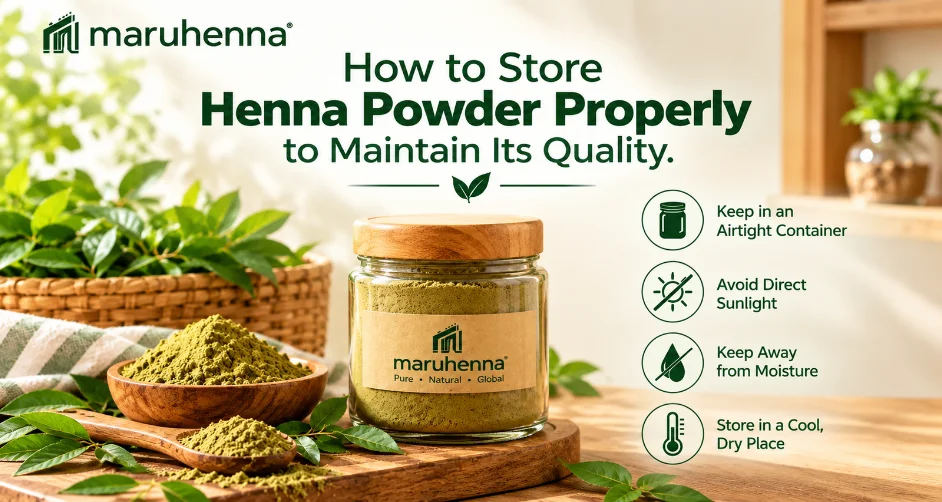
Henna powder is widely used for natural hair colouring, traditional mehndi, and selected botanical beauty applications. While choosing good-quality henna is important, proper storage also plays a role in maintaining its condition.
Exposure to moisture, heat, sunlight, and contamination can affect stored botanical powders. For households, salons, retailers, and wholesalers, understanding the basics of henna storage can help reduce waste and support better stock management.
Here are practical tips for storing henna powder correctly.
Moisture can cause dry henna powder to clump and may increase the risk of deterioration or contamination.
To help protect the powder:
If the powder becomes damp or shows signs of mould or contamination, do not use it.
Packaging provides a barrier against environmental exposure and helps protect the powder during storage.
Depending on the product and quantity, suitable packaging may include sealed pouches or containers designed for dry ingredients.
Good packaging should be practical to handle, easy to seal, and appropriate for the intended storage conditions.
For commercial products, clear labels can also help users identify the product, batch, and recommended storage instructions.
Avoid leaving henna powder in direct sunlight or near sources of excessive heat.
A clean, dry storage cupboard may be suitable if the temperature and humidity remain within the manufacturer's recommended conditions.
Stable storage conditions help reduce unnecessary exposure to environmental changes.
Always follow the specific storage instructions provided with your henna product.
Dust, insects, dirty handling equipment, and contact with other materials can affect product quality.
Follow simple handling practices:
These precautions are useful for both personal users and commercial facilities.
Henna powder does not have one universal shelf life that applies to every product.
Its usable period depends on the raw material, processing, packaging, storage conditions, and manufacturer specifications.
Check the expiry date or recommended period of use where provided.
Do not rely on appearance alone to determine whether the powder is still suitable. If the packaging is damaged, the product has been stored incorrectly, or you notice unusual changes, contact the supplier for guidance.
Before use, inspect the product and its packaging.
Potential warning signs include:
If you notice these problems, avoid applying the product to hair or skin until its suitability has been established. Discard it if contamination or deterioration is confirmed.
Refrigeration is not automatically necessary for every henna powder product.
Follow the manufacturer's storage guidance for your specific product. If refrigeration is recommended, pay attention to condensation when moving a cold package into a warm or humid environment.
Moisture entering the powder can create storage problems, so packaging should remain properly sealed.
Dry henna powder and prepared henna paste have different storage requirements.
Once liquid is added, the mixture may have a much shorter usable period.
Use clean preparation equipment, follow the manufacturer's storage instructions, and observe any recommended temperature limits.
Do not assume that prepared paste can be kept at room temperature for an extended period.
Discard any paste that shows signs of contamination or deterioration.
Businesses that handle henna in larger quantities should pay attention to stock management.
Check packaging condition when new stock arrives and report damaged or compromised packaging promptly.
Keep relevant information about batch numbers, receipt dates, and storage locations.
Use an appropriate first-in, first-out system while respecting expiry dates and supplier instructions.
Order quantities that match expected demand and available storage capacity.
Ensure that everyone handling henna understands the importance of clean, dry handling and proper sealing.
These practices can help businesses manage stock more consistently.
Good storage practices begin with understanding the product.
When buying henna powder, ask about the recommended storage conditions, packaging, product specifications, and applicable shelf-life guidance.
For commercial buyers, clear communication about batches, delivery conditions, and product documentation can be particularly useful.
Maru Henna, based in Sojat, Rajasthan, supplies henna products and offers business supply options. Buyers should confirm product-specific storage instructions and specifications before purchasing.